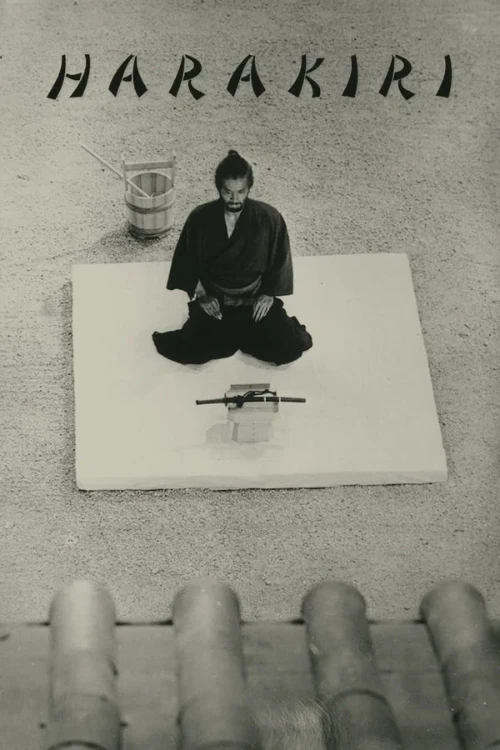
Masaki Kobayashi’s 1962 masterpiece, Seppuku (globally released as Harakiri), stands as one of the most powerful and devastating period dramas in cinematic history. Set in 17th-century Japan, the narrative begins with Hanshiro Tsugumo, an impoverished masterless samurai who arrives at the estate of the Iyi clan requesting permission to commit ritual suicide. What initially appears to be a formal request gradually unravels into a calculated and fierce confrontation. Kobayashi seamlessly transforms a deceptively simple premise into a searing critique of feudal hypocrisy and corrupted institutional morality.
The film’s narrative construction is a marvel of storytelling precision. Written by Shinobu Hashimoto, the screenplay utilizes meticulously paced flashbacks to strip away layers of illusion, exposing a painful human tragedy. Through the heartbreaking fate of Motome Chijiiwa, the film interrogates rigid concepts of honor, loyalty, and tradition, revealing how ruling elites use code and dogma to preserve their own status while crushing the vulnerable. The sacred samurai armor, revered throughout the estate, ultimately serves as a stark metaphor for an empty, hollow façade.
Tatsuya Nakadai delivers a titan performance as Hanshiro. His intense gaze and controlled demeanor convey both boundless grief and righteous fury with extraordinary restraint. Visually, Yoshio Miyajima’s stark cinematography uses rigid framing, deep shadows, and geometric symmetry to heighten the claustrophobic tension, perfectly complemented by Toru Takemitsu’s minimalist, haunting score. The climactic duel scenes avoid glamorous choreography, grounded instead in bleak realism and raw emotional gravity.
Ultimately, Seppuku transcends its historical setting to become a timeless indictment of systemic tyranny and empty formalism. Kobayashi challenges the audience to question any power structure that sacrifices basic human empathy for the sake of prestige and appearances. It remains an absolute triumph of cinematic art, unflinching in its morality and unforgettable in its execution.