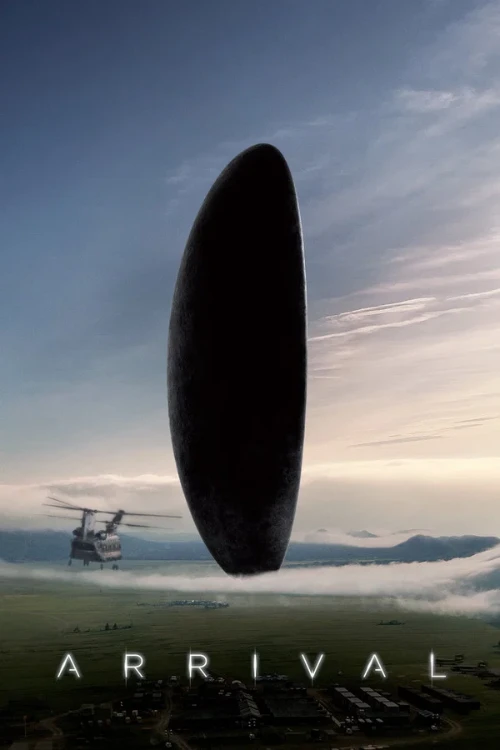
Linguistics professor Louise Banks leads an elite team of investigators when gigantic spaceships touchdown in 12 locations around the world. As nations teeter on the verge of global war, Banks and her crew must race against time to find a way to communicate with the extraterrestrial visitors. Hoping to unravel the mystery, she takes a chance that could threaten her life and quite possibly all of mankind.
Denis Villeneuve’s 2014 masterpiece Arrival fundamentally reinvents the traditional alien invasion trope, delivering a fresh, profound, and hypnotic vision to science fiction cinema. Based on Ted Chiang’s novella "Story of Your Life," the film follows linguist Louise Banks as she is recruited to establish communication with mysterious extraterrestrial vessels that have landed across the globe. Departing from tropes of warfare and destruction, Arrival shifts the battlefield to language, perception, and the power of understanding.
The greatest strength of the film lies in its ability to translate the complex concept of linguistic relativity (the Sapir-Whorf hypothesis) into an emotionally devastating narrative device. As Louise deciphers the non-linear written language of the visitors, her own perception of time and memory begins to reshape. Villeneuve constructs this journey with a deliberate, tense, and deeply intellectual atmosphere. Amy Adams delivers a career-defining performance, grounding the high-concept premise with raw human vulnerability, while Jóhann Jóhannsson’s haunting score heightens the existential wonder.
Arrival offers a poignant philosophical meditation on determinism, memory, and grief, ultimately asserting that life is worth embracing even when its tragic outcomes are already known. With its elegant storytelling, striking visual design, and emotional resonance, it remains a monumental triumph of modern cinema.